
Why Reliable Restorations Cut Chairside Adjustments

Last Updated: November 10, 2026
Quick Summary
Reliable restorations cut chairside adjustments because accurate scans, verified bite records, and correct material selection prevent fit and occlusion errors before fabrication. A crown that seats cleanly with proper contacts needs only a light polish, while repeated grinding signals a break earlier in the chain. Choosing a laboratory that flags unclear records keeps refinement minimal.
Marginal detail is where fit is won or lost, so scans must capture clear finish lines.
Record a verified bite in centric relation, not just maximum intercuspation.
Zirconia is hard and does not forgive a high spot, so accurate occlusal design matters.
Adjust to a verified centric relation position and refine excursive pathways, not just static stops.
Polish adjusted surfaces back to a smooth finish so roughened areas do not collect plaque.
Tired of adjusting every crown at try-in?
Diamond Dental Lab fabricates precise, natural-looking restorations with dependable turnaround and clear communication.
Table of Contents
Minimizing Dental Chairside Time Through Better Case Planning
Dental Restoration Fit Accuracy: What Separates a Seat-and-Go Crown From a Rework
Material Selection for Long-Lasting Results: Zirconia, Acrylic Hybrid, and Beyond
Clinical Tips for Occlusal Adjustment That Protect Durability
Full-Arch and Implant-Supported Restorations: Where Precision Matters Most
Why Chairside Adjustments Signal a Restoration Problem
Every chairside adjustment on a crown or bridge is unplanned patient time, and it usually traces back to something that went wrong before the restoration reached your operatory. Chairside adjustments can be read as a diagnostic signal rather than routine cost.
Chairside adjustment is the clinical grinding, contouring, or occlusal refinement a dentist performs on a restoration after it is tried in, to correct fit, contacts, or bite. A small amount is normal. A pattern of it is not.
Adjustments are not free. They consume appointment time, risk thinning porcelain or weakening a margin, and create a finish that may not match the factory surface. A restoration needing minimal refinement protects the schedule and the result.
The reasons restorations miss the mark cluster into predictable causes: distorted margins, models poured from shifted impressions, bite records that miss centric relation, and material choices that do not suit the case. Each is preventable with better case planning and a laboratory that flags problems before fabrication.
Below, we cover where adjustments come from, how planning and material selection reduce them, and how to choose a laboratory partner that makes predictable seating the norm.
Minimizing Dental Chairside Time Through Better Case Planning
Most chairside time you save is decided before the patient sits down. Good case planning is the highest-use step in reducing dental chairside time because it catches problems that would otherwise surface at try-in. A clear scan, accurate bite record, and documented shade note cost minutes at the prep visit; a remake costs an entire second appointment.
Treating the impression or scan as a formality is a common mistake. Marginal detail is where fit is won or lost, if the scan misses the finish line, no laboratory skill recovers it. The same applies to bite records: a single static bite that does not reflect centric relation leaves the technician guessing at occlusion, and guesses show up as occlusal refinements in your chair.
A laboratory can help before the case ships. When a lab questions unclear margins or bite records, problems can be solved on the model instead of in the mouth.
Capture full-arch scans with clear finish lines and no soft-tissue drag
Record a verified bite in centric relation, not just maximum intercuspation
Photograph the shade with a reference tab under consistent lighting
Note any prep that sits close to the pulp or has minimal reduction
Flag cases with limited interarch space or unusual occlusal schemes
For complex esthetic or full-mouth cases, a diagnostic wax-up lets you preview the proposed contours and occlusion on a model before any tooth is prepared. Our team can walk you through what we need for those submissions on our dentist support page, and you can see how diagnostic wax-ups fit into treatment planning for cases that need a rehearsal before the final restoration.
Dental Restoration Fit Accuracy: What Separates a Seat-and-Go Crown From a Rework
Dental restoration fit accuracy comes down to the marginal seal and the internal adaptation, and both are decided by the chain of records, models, and milling that precede try-in. A crown that seats with light pressure and a clean margin has accurate marginal accuracy and an internal surface that matches the die. A crown that rocks, sits high, or shows an open margin failed somewhere upstream.

The difference between a seat-and-go crown and a rework is rarely one dramatic error; it is accumulation. A slightly rounded margin, a model that expanded a fraction, an aggressively trimmed die, and a mill running true to a flawed design all compound at the margin.
Marginal accuracy is a longevity issue, not just seating convenience. A margin that does not adapt closely invites cement washout and bacterial leakage, a path to failure and replacement. A well-fitting margin ideally seats without adjustment and stays sealed over time.
Material Selection for Long-Lasting Results: Zirconia, Acrylic Hybrid, and Beyond
Material selection is where durability, esthetics, and chairside adjustment burden negotiate, and the right answer depends on where the restoration sits, what it must withstand, and how much refinement you will do at try-in. This section compares materials on fit predictability, occlusal adjustability, wear behavior, repairability, and esthetic range.
Zirconia offers high flexural strength for posterior crowns, bridges, and implant-supported restorations under heavy load. Its adjustment profile is worth considering: zirconia is hard and does not forgive a high spot, so a well-designed occlusion matters. A slightly high contact is more time-consuming to correct and harder to repolish than with a softer material.
The trade-off is wear resistance: acrylic hybrid does not match ceramic for a single posterior unit under heavy load. For full-arch hybrids, refinishability is an advantage because maintenance is expected.
Lithium disilicate sits between them for anterior esthetics where translucency matters, balancing strength and optical properties, but it is limited to lighter load and less forgiving than zirconia in high-stress posterior applications. Its adjustment behavior is closer to ceramic than acrylic, so accurate occlusal design upstream reduces chairside refinement.
Matching Material to Case Type
Case Type | Typical Material | Adjustment Burden | Longevity Profile | Watch For |
Posterior single crown | Zirconia | Higher if occlusion is off; hard to adjust | High wear resistance, strong under load | Needs accurate occlusal design and verified bite |
Anterior crown or veneer | Lithium disilicate | Moderate; ceramic-like adjustment | Good esthetics, limited to lighter load | Confirm shade and translucency with photos |
Implant-supported crown | Zirconia | Higher; verify abutment fit first | Strong on screw-retained base | Any abutment bind shows up as adjustment or loosening |
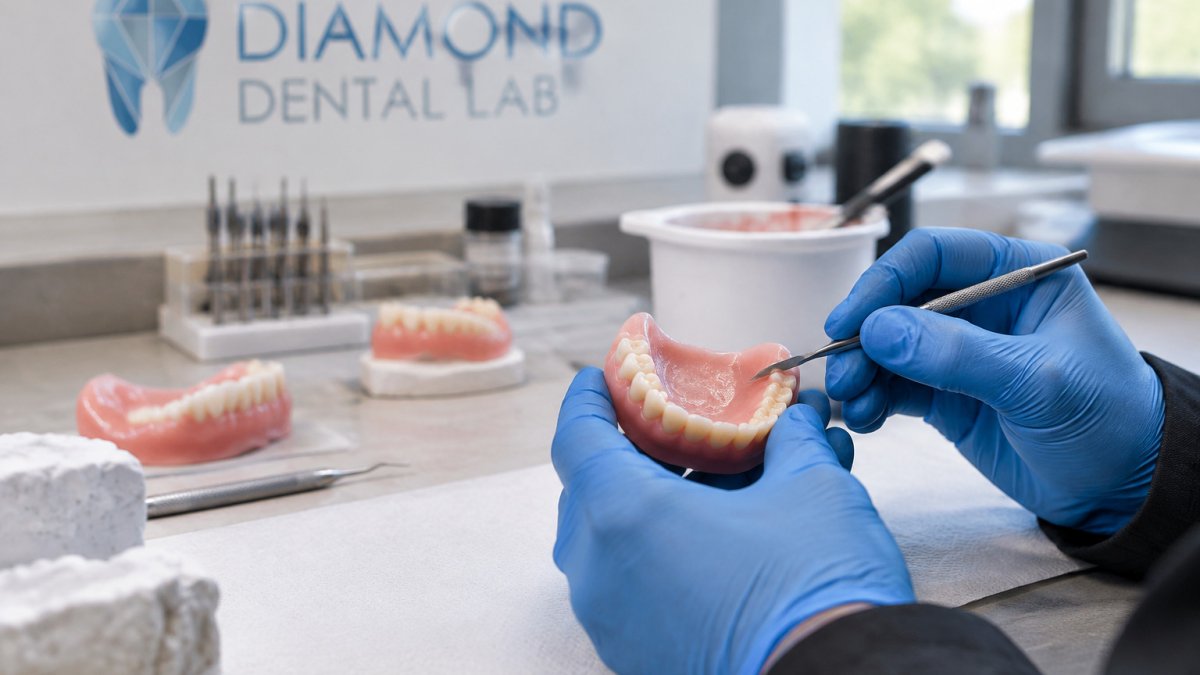
Full-arch hybrid | Acrylic hybrid | Lower; easier to refine and polish | Refinishable, lower wear resistance | Plan for maintenance and periodic refinishing |
Provisional | Acrylic | Lowest; easy to adjust | Short-term use only | Replace before wear affects occlusion |
Color matching and stability belong in the same conversation: a material that looks right on day one but shifts or stains undercuts the esthetic result. Shade notes with photographs and a reference tab let the technician hit the target the first time. For a closer look, see our crown and bridge service page.
Watch out: choosing the strongest material on paper without matching it to the case causes avoidable chairside adjustment, because a hard-to-refine material punishes any occlusal error that reaches the chair.
Clinical Tips for Occlusal Adjustment That Protect Durability
Occlusal adjustment done well protects the restoration; done hastily, it can shorten its life. The goal is even, bilateral stops in centric relation with smooth excursive pathways, not simply "grinding until it feels right." A few clinical habits make the difference.
Verify centric relation first. Adjust to a verified CR position, not maximum intercuspation, so the restoration sits where the joint and musculature agree.
Check contacts in both arches before refining. Mark with articulating paper at light and heavy settings to see the true contact pattern, not just the high spot.
Refine excursive pathways, not just static stops. A crown that clears in CR but catches in lateral excursion will load unevenly and wear or fracture.
Preserve surface quality after grinding. Polish adjusted surfaces back to a smooth finish so the roughened area does not collect plaque or abrade the opposing tooth.
Confirm vertical dimension. If a restoration changes the vertical dimension, recheck the whole arch, not just the single unit.
What most guides miss is the finishing step. Grinding opens the surface, and an unpolished adjusted area gathers plaque and wears opposing enamel faster. A few minutes with the right polishing sequence protects both the restoration and the tooth across from it. When adjustments are minimal, this step is quick; when a crown needs heavy refinement, you are polishing surface you would rather not have touched.
Full-Arch and Implant-Supported Restorations: Where Precision Matters Most
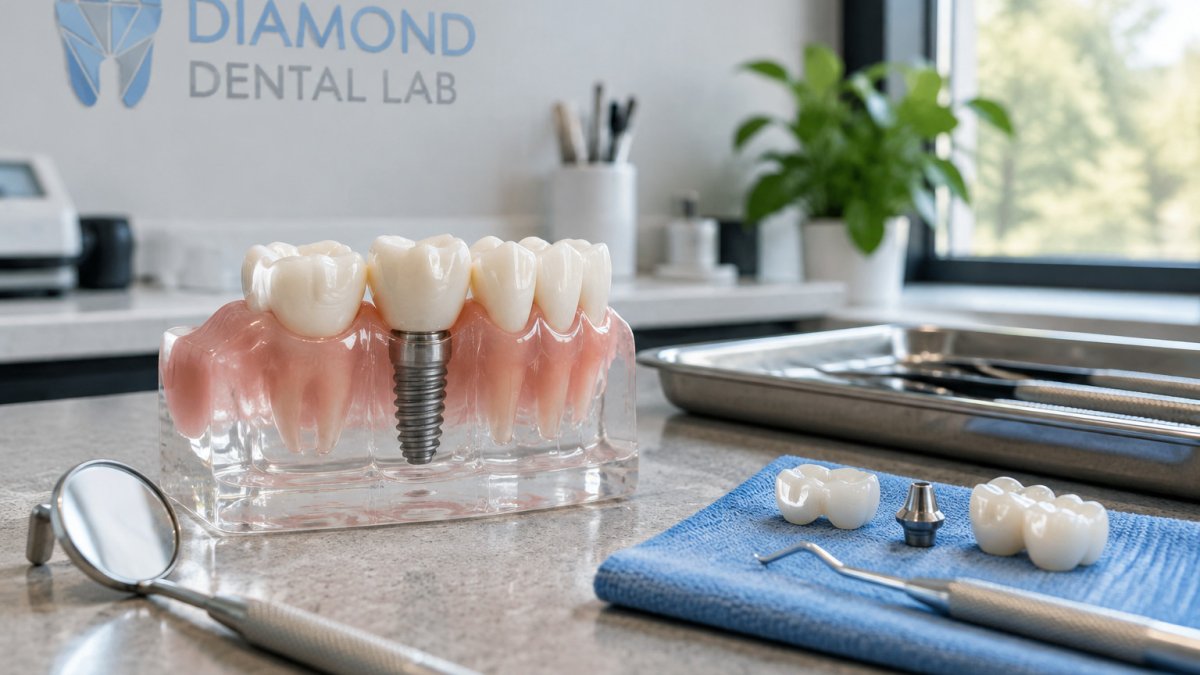
Full-arch and implant-supported restorations concentrate precision demands into one case, rewarding careful planning. They depend on accurate implant positions, a passive fit across multiple abutments, and occlusion that distributes load evenly. A screw-retained restoration that binds at one abutment can introduce stress that shows up later as loosening or fracture.
The fit challenge differs from a single crown: one unit has one margin to adapt, while a full-arch has several implant interfaces that must all seat without strain, and a small error at one site can prevent the whole framework from seating passively. Implant positions and abutment fit are typically verified before fabrication, and cases where records suggest a bind should be flagged.
Occlusion matters just as much on a full-arch case. With more units sharing the load, a high spot at one contact can overload a single implant or the opposing arch. Careful occlusal design in the laboratory, followed by a controlled adjustment at delivery, keeps the load balanced. For implant-supported cases, our implant restorations page covers what we need to plan and fabricate a framework that seats passively.
Choosing a Laboratory That Delivers Predictable Results
Choosing a laboratory is really a question of which partner reduces your chairside surprises, and the answer is not always the biggest name.
Start with restoration type and material. For posterior zirconia, ask how the laboratory designs occlusion and whether it verifies bite records before fabrication. For anterior lithium disilicate, ask how shade and translucency are confirmed and whether photographs are required.
Occlusal complexity is the next filter. Simple single-unit cases with a clear centric relation record are forgiving; cases with limited interarch space, altered vertical dimension, or unusual occlusal schemes are not.
Esthetic demand and case complexity drive the remaining questions. High-esthetic anterior cases need a laboratory that documents shade with photographs and a reference tab and can discuss translucency and surface texture. Complex full-mouth cases need a technician who can advise on diagnostic wax-ups and staged treatment, not just fabricate.
Here is what to look for when you evaluate a partner against those criteria:
Responsive communication. Questions about a scan or bite record should get answered before the case is milled, not after it fails.
Consistent quality across case sizes. Ask whether a lab gives a solo practitioner the same attention as a large account.
Technical support for complex cases. Implant and full-arch work needs a technician who can advise on design, not just fabricate.
Realistic turnaround times. Ask what happens when a case slips, and whether you will hear about it early.
A track record of fit. Ask how often cases come back needing adjustment, and listen for specifics rather than assurances.
One dentist customer, Dr. Cason of Little Rock, AR, said: "Communication has been very seamless. The cases always come back on time and look great with adjustments rarely needed."
Watch out: evaluating a laboratory only on price or turnaround without matching it to your case mix can lead to a partner that performs well on simple cases but struggles with the complex ones that consume the most chairside time.
Download the New Client Form and Start Your First Case
If chairside adjustments are eating into your schedule, the fix starts with a laboratory that treats fit as a priority from the first scan. We would rather catch a problem on the model than have you find it at try-in, and our technicians bring extensive hands-on experience to every case. Ready to see the difference a responsive partner makes? Download our new client form to open an account and send your first case. We will review it, flag anything that needs clarification, and get it into fabrication with the communication and turnaround you need to keep your chair time predictable.
Ready to stop grinding and start seating? Get started with Diamond Dental Lab and send your first case to a team that treats every restoration as a fit-first job.
Frequently Asked Questions
What factors contribute to the longevity of dental restorations?
Four factors drive how long a restoration lasts: marginal fit, occlusal harmony, material choice, and the patient's hygiene and parafunctional habits. A crown with a tight margin and balanced contacts resists cement washout and fracture far better than one that needed heavy chairside grinding. Material matters too. Zirconia handles posterior load well, while acrylic hybrids suit implant-supported cases where resilience helps. Regular follow-up visits catch marginal breakdown early, before it turns into a remake.
How can dental labs help reduce chairside adjustment time?
Labs reduce chairside adjustments by controlling the variables dentists cannot see: die preparation accuracy, margin capture, occlusal design, and shade matching. A lab that reviews digital impressions before fabrication and flags thin margins or ambiguous contacts saves the practice a second appointment. Clear laboratory communication matters just as much. When shade notes, bite records, and photos arrive complete, technicians can design contacts that seat with minimal grinding, which is the core of minimizing dental chairside time.
Are zirconia restorations better for reducing chairside adjustments?
Zirconia often needs fewer occlusal refinements than layered ceramics because it can be milled to a precise, uniform thickness and holds its shape through sintering. That said, fit accuracy depends more on the digital workflow and the lab's quality control than on the material alone. Zirconia is a strong default for posterior single units and implant-supported restorations, but esthetic cases in the anterior may still call for a layered option. Match the material to the case, not the other way around.
How does digital impression technology improve restoration fit accuracy?
Digital impressions remove the distortion that comes with physical impression materials, especially around subgingival margins and multiple preparations. Scans also let the lab review the file before production starts, so a retake happens before the patient leaves rather than after a remake. Combined with CAD design and milling, digital impressions tighten marginal accuracy and reduce the human error that leads to open contacts. The result is fewer chairside adjustments and more predictable seating at delivery.
Comments